<?xml version="1.0" encoding="UTF-8"?>
<feed xmlns="http://www.w3.org/2005/Atom">
  <title type="text">Statues Speak @ Duke</title>
  <updated>2026-10-11T00:46:32+00:00</updated>
  <generator uri="http://framework.zend.com" version="1.12.20">Zend_Feed_Writer</generator>
  <link rel="alternate" type="text/html" href="https://projects.dahvc.org/statuesspeak/"/>
  <link rel="self" type="application/atom+xml" href="https://projects.dahvc.org/statuesspeak/items/browse?output=rss2"/>
  <id>https://projects.dahvc.org/statuesspeak/</id>
  <author>
    <name>Statues Speak @ Duke</name>
    <uri>https://projects.dahvc.org/statuesspeak</uri>
  </author>
  <link rel="hub" href="http://pubsubhubbub.appspot.com/"/>
  <entry>
    <title type="html"><![CDATA[Making a Bronze Statue – The &quot;Lost Wax&quot; Technique]]></title>
    <summary type="html"><![CDATA[<p><p><strong><em>Have you ever wondered how bronze statues are made? They often come to life through a complex and time-consuming process called the &quot;lost wax&quot; technique.</p><p>
The lost wax technique begins with a painstakingly detailed clay model that will eventually be reproduced in hollow bronze. The process––long, laborious, and expensive––is explained in this short video. The statues you will see are small (under 2 feet tall), so they were cast in one piece. A life-size statue, like that of James B. Duke, would be cast in multiple pieces (usually the head, the torso, the legs, and the arms) and then assembled, polished, patinaed, and mounted. </p><p>
From start to finish, a life-size statue might take six months to a year to complete. In today&#039;s market, such statues require thousands of dollars of raw materials to produce. From hiring an artist, to purchasing materials, to paying for bronze-casting, large statue monuments can cost upward of $200,000. Just the stone pedestal on which a statue is set might cost tens of thousands of dollars.</em></strong></p><p></p></p><p><em><strong><a href="https://projects.dahvc.org/statuesspeak/items/show/46">For more (including 1 video), view the original article</a>.</strong></em></p><p></p>]]></summary>
    <published>2018-04-04T16:02:59+00:00</published>
    <updated>2018-04-16T18:46:52+00:00</updated>
    <link rel="alternate" type="text/html" href="https://projects.dahvc.org/statuesspeak/items/show/46"/>
    <id>https://projects.dahvc.org/statuesspeak/items/show/46</id>
    <author>
      <name>Elizabeth Baltes, Michael DiGiorgio, and Darrah Panzarella</name>
    </author>
  </entry>
  <entry>
    <title type="html"><![CDATA[The Scientist and Nature – Want to know why there is a statue of a camel on campus? <br /><br /><audio controls="controls"><source src="https://projects.dahvc.org/statuesspeak/files/original/660ed428cb8504495c173ed03bb4d69e.mp3" type="audio/mpeg" /><style> audio::-internal-media-controls-download-button {
    display:none;
}

audio::-webkit-media-controls-enclosure {
    overflow:hidden;
}

audio::-webkit-media-controls-panel {
    width: calc(100% + 30px); /* Adjust as needed */
}</style>Your browser does not support the audio element. </audio>]]></title>
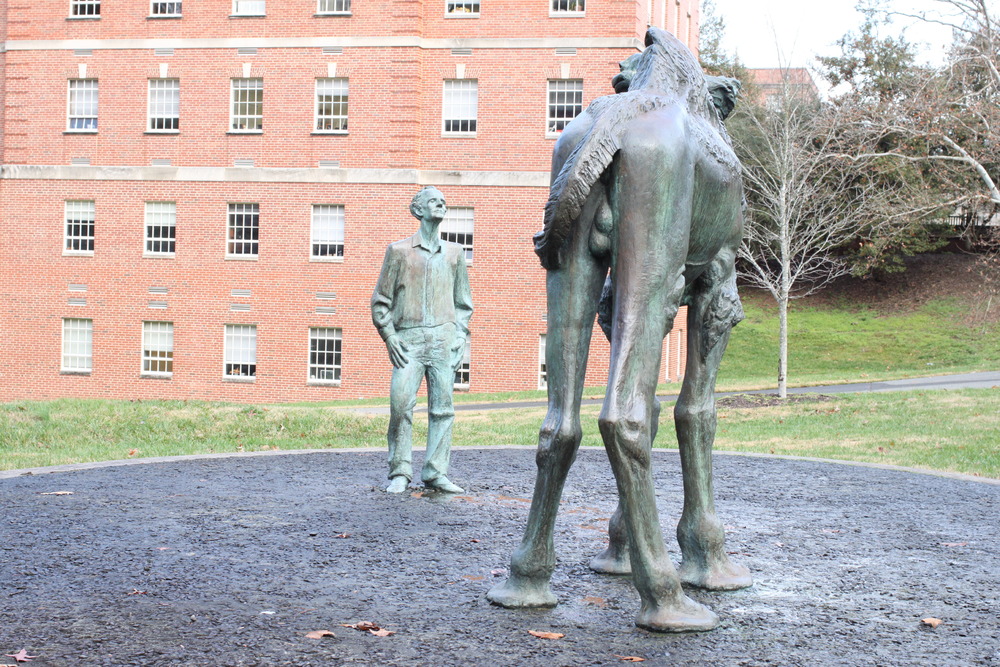
    <summary type="html"><![CDATA[<p><img src="https://projects.dahvc.org/statuesspeak/files/fullsize/ef8bb8508e55116f2f870d6f61d45cd1.jpg" alt="" /><br/><p><strong><em>This life-size bronze statue group commemorates Duke physiology professor Knut Schmidt-Nielson (1915–2007) and his groundbreaking work in animal physiology––especially that of camels.</em></strong></p><p><div class="sketchfab-embed-wrapper"><iframe width="100%" height="350" src="https://sketchfab.com/models/3c1348c1ea974c8b9e05c36afdee39a1/embed" frameborder="0" allowvr="" allowfullscreen="allowfullscreen" mozallowfullscreen="mozallowfullscreen" webkitallowfullscreen="webkitallowfullscreen" onmousewheel=""></iframe></div></p></p><p><em><strong><a href="https://projects.dahvc.org/statuesspeak/items/show/44">For more (including 5 images and 1 sound clip), view the original article</a>.</strong></em></p><p></p>]]></summary>
    <published>2018-01-08T18:31:00+00:00</published>
    <updated>2020-09-04T20:18:46+00:00</updated>
    <link rel="alternate" type="text/html" href="https://projects.dahvc.org/statuesspeak/items/show/44"/>
    <id>https://projects.dahvc.org/statuesspeak/items/show/44</id>
    <author>
      <name>Elizabeth Baltes and Jessica Williams</name>
    </author>
  </entry>
  <entry>
    <title type="html"><![CDATA[James B. Duke – Want to know more about the portrait statue that honors the founder of the Duke Endowment?<br /><br /><audio controls="controls"><source src="https://projects.dahvc.org/statuesspeak/files/original/538632949ff43970327c58cb493acfa7.mp3" type="audio/mpeg" /><style> audio::-internal-media-controls-download-button {
    display:none;
}

audio::-webkit-media-controls-enclosure {
    overflow:hidden;
}

audio::-webkit-media-controls-panel {
    width: calc(100% + 30px); /* Adjust as needed */
}</style>Your browser does not support the audio element. </audio>]]></title>
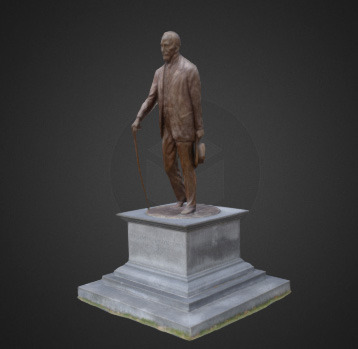
    <summary type="html"><![CDATA[<p><img src="https://projects.dahvc.org/statuesspeak/files/fullsize/3a96d984c06be0040984d281d91afa0f.jpg" alt="" /><br/><p><strong><em>This 8-foot tall portrait statue commemorates James B. Duke&#039;s endowment of Trinity College in 1924, for which the university was renamed in honor of his family. Although students protested the statue when it was placed here in 1935, it has since become an iconic symbol of Duke University.</em></strong></p><p><div class="sketchfab-embed-wrapper"><iframe width="100%" height="350" src="https://sketchfab.com/models/9df882b1e6a5401a91444677b2e5579d/embed" frameborder="0" allowvr="" allowfullscreen="allowfullscreen" mozallowfullscreen="mozallowfullscreen" webkitallowfullscreen="webkitallowfullscreen" onmousewheel=""></iframe></div></p></p><p><em><strong><a href="https://projects.dahvc.org/statuesspeak/items/show/43">For more (including 9 images and 1 sound clip), view the original article</a>.</strong></em></p><p></p>]]></summary>
    <published>2018-01-08T18:21:29+00:00</published>
    <updated>2020-09-04T20:17:13+00:00</updated>
    <link rel="alternate" type="text/html" href="https://projects.dahvc.org/statuesspeak/items/show/43"/>
    <id>https://projects.dahvc.org/statuesspeak/items/show/43</id>
    <author>
      <name>Elizabeth Baltes</name>
    </author>
  </entry>
  <entry>
    <title type="html"><![CDATA[Robert E. Lee – Statues speak. Communities speak back.]]></title>
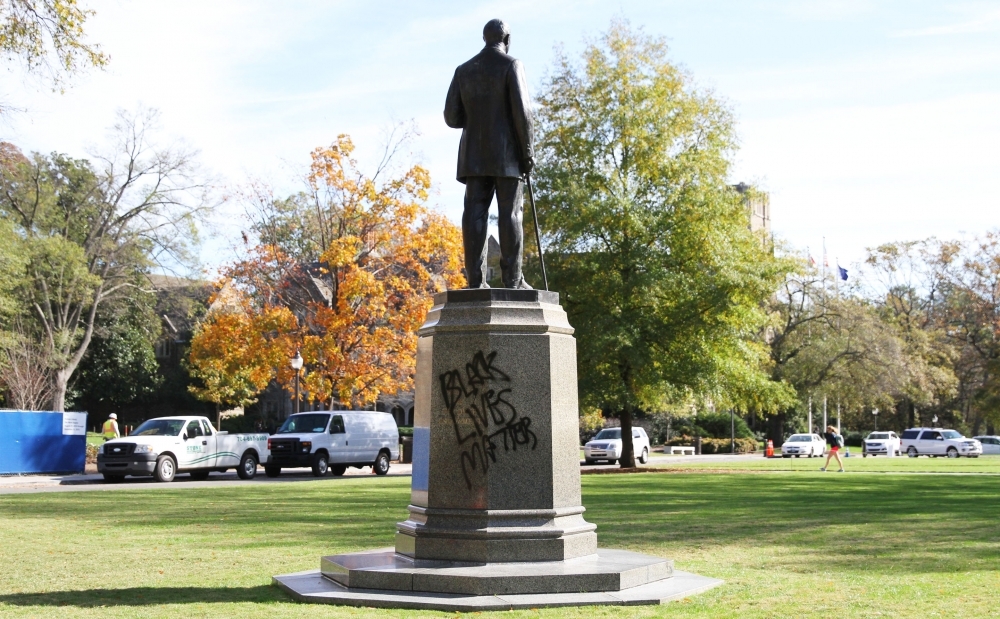
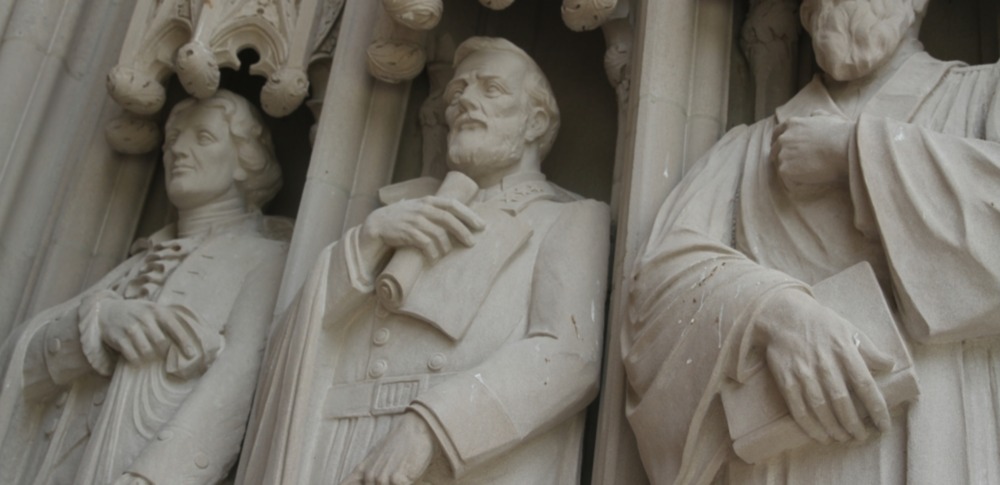
    <summary type="html"><![CDATA[<p><img src="https://projects.dahvc.org/statuesspeak/files/fullsize/1b646753c561fd37324f51f29435370a.jpg" alt="" /><br/><p><strong><em>Recent events have shone a spotlight on the struggle to come to terms with our memorial landscapes. The empty niche on Duke Chapel&#039;s facade once held a statue of Confederate General Robert E. Lee. After it was defaced in August 2017, it was promptly and quietly removed on the order of university officials. Debates surrounding Confederate monuments, in particular, have raised important questions about how we remember (and honor) our nation&#039;s past. While portrait statues tend to &quot;talk&quot; about themselves in positive terms, the story they tell is often one-sided.</p><p>
The call to remove these statues from the civic landscape has been heard since at least the late 19th century. Until quite recently, the call has usually fallen on deaf ears. Since the beginning of 2016, however, a growing number of Confederate monuments have been officially removed from public spaces and universities. Those opposed to removal contend that taking down a statue is tantamount to erasing history. It is sometimes difficult to remember that statues are not neutral historical documents; as commemorative monuments, they have social and political agendas. Their stories are often biased in favor of the opinions of those who paid to set them up.</p><p>
In the wake of the Black Lives Matter movement and the violence in Charlottesville, VA, over the planned removal of a statue of Robert E. Lee, Confederate monuments across the country were the victims of cultural vandalism. The acts of iconoclasm brought welcome attention not only to the statues around us, but also to the social narratives and experiences that are not usually visible in a monumental landscape that, more often than not, celebrates white men. Although new stories are now being told through new portrait monuments that represent women and people of color, the question remains: if portrait statues are meant to be permanent memorials to (and celebrations of) the men and women they represent, what do we do when we change our minds about the people we once chose to honor? What is to become of the large, expensive hunks of stone and marble that make up the monuments of once-honored individuals accused of sexual misconduct, racial oppression, or even genocide? </p><p>
In contemporary society bronze statue monuments are often difficult to remove from public spaces not only because of their accrued social value, but also because of the monetary costs involved in physically taking them down and storing them (removing four bronze Confederate statues in New Orleans, Louisiana, cost over $2,000,000!). To better understand the value we place on bronze statues and why it can be so difficult to take them down, the next &quot;stop&quot; on this tour will examine the process of making them.</em></strong></p><p></p></p><p><em><strong><a href="https://projects.dahvc.org/statuesspeak/items/show/42">For more (including 2 images), view the original article</a>.</strong></em></p><p></p>]]></summary>
    <published>2018-01-08T18:18:29+00:00</published>
    <updated>2018-04-16T18:45:46+00:00</updated>
    <link rel="alternate" type="text/html" href="https://projects.dahvc.org/statuesspeak/items/show/42"/>
    <id>https://projects.dahvc.org/statuesspeak/items/show/42</id>
    <author>
      <name>Elizabeth Baltes</name>
    </author>
  </entry>
  <entry>
    <title type="html"><![CDATA[65th Commemorative Statue Group – Want to know more about the only statue on Duke's campus to commemorate a woman?<br /><br /><audio controls="controls"><source src="https://projects.dahvc.org/statuesspeak/files/original/7c0a2fc4a557a04b698a573ea6b2aa45.mp3" type="audio/mpeg" /><style> audio::-internal-media-controls-download-button {
    display:none;
}

audio::-webkit-media-controls-enclosure {
    overflow:hidden;
}

audio::-webkit-media-controls-panel {
    width: calc(100% + 30px); /* Adjust as needed */
}</style>Your browser does not support the audio element. </audio>]]></title>
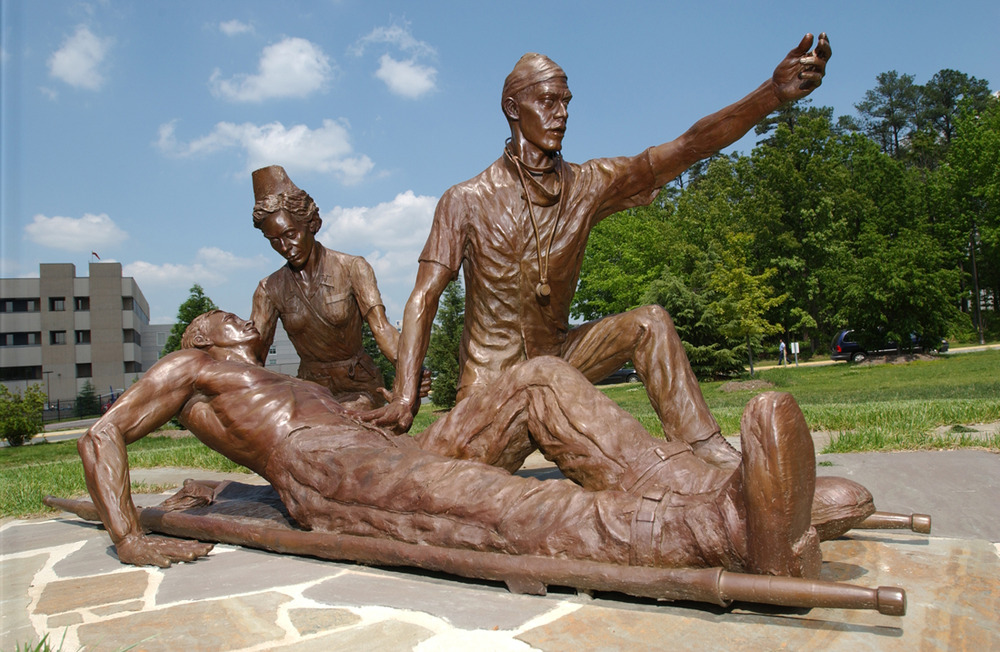
    <summary type="html"><![CDATA[<p><img src="https://projects.dahvc.org/statuesspeak/files/fullsize/a6b227ee6534760b27b36425a3ea5056.jpg" alt="" /><br/><p><strong><em>This life-size bronze statue group commemorates the 65th General Hospital, a group of Duke doctors and nurses who were stationed in England during WWII. Although these are not portraits of specific individuals, the group includes statues of a wounded soldier, a doctor, and a nurse, with a corpsman running to their aid. The image of the nurse is the only statue on Duke&#039;s campus to honor women&#039;s contributions to the cultural history of the University. Instead of basing the statue on a single nurse, North Carolina sculptor Stephen H. Smith drew on historical documents to create a statue to stand for all the nurses of the 65th.</em></strong></p><p></p></p><p><em><strong><a href="https://projects.dahvc.org/statuesspeak/items/show/41">For more (including 8 images and 1 sound clip), view the original article</a>.</strong></em></p><p></p>]]></summary>
    <published>2018-01-08T18:05:01+00:00</published>
    <updated>2020-09-04T20:19:45+00:00</updated>
    <link rel="alternate" type="text/html" href="https://projects.dahvc.org/statuesspeak/items/show/41"/>
    <id>https://projects.dahvc.org/statuesspeak/items/show/41</id>
    <author>
      <name>Elizabeth Baltes</name>
    </author>
  </entry>
  <entry>
    <title type="html"><![CDATA[Benjamin Duke  – Want to know more about the newest addition to Duke's statue landscape?<br /><br /><audio controls="controls"><source src="https://projects.dahvc.org/statuesspeak/files/original/8f591a8ca132f8e764087bd58be5fca8.mp3" type="audio/mpeg" /><style> audio::-internal-media-controls-download-button {
    display:none;
}

audio::-webkit-media-controls-enclosure {
    overflow:hidden;
}

audio::-webkit-media-controls-panel {
    width: calc(100% + 30px); /* Adjust as needed */
}</style>Your browser does not support the audio element. </audio>]]></title>
    <summary type="html"><![CDATA[<p><img src="https://projects.dahvc.org/statuesspeak/files/fullsize/2eb87f484553c9f204ba00a09f43420c.jpg" alt="" /><br/><p><strong><em>This life-size bronze statue commemorates Benjamin Duke, son of Washington Duke, and brother of James B. Duke.</em></strong></p><p><div class="sketchfab-embed-wrapper"><iframe width="100%" height="350" src="https://sketchfab.com/models/c25fb0ef2e854579b7ac3bd23eb48795/embed" frameborder="0" allowvr="" allowfullscreen="allowfullscreen" mozallowfullscreen="mozallowfullscreen" webkitallowfullscreen="webkitallowfullscreen" onmousewheel=""></iframe></div></p></p><p><em><strong><a href="https://projects.dahvc.org/statuesspeak/items/show/31">For more (including 8 images and 1 sound clip), view the original article</a>.</strong></em></p><p></p>]]></summary>
    <published>2015-12-11T13:55:25+00:00</published>
    <updated>2020-09-04T20:21:55+00:00</updated>
    <link rel="alternate" type="text/html" href="https://projects.dahvc.org/statuesspeak/items/show/31"/>
    <id>https://projects.dahvc.org/statuesspeak/items/show/31</id>
    <author>
      <name>Elizabeth Baltes and Christy Kuesel</name>
    </author>
  </entry>
  <entry>
    <title type="html"><![CDATA[The Sower – Want to know how this statue of a farmer ended up on Duke's campus?<br /><br /><audio controls="controls"><source src="https://projects.dahvc.org/statuesspeak/files/original/00e88cbe59bda2d0e96427ebec26d530.mp3" type="audio/mpeg" /><style> audio::-internal-media-controls-download-button {
    display:none;
}

audio::-webkit-media-controls-enclosure {
    overflow:hidden;
}

audio::-webkit-media-controls-panel {
    width: calc(100% + 30px); /* Adjust as needed */
}</style>Your browser does not support the audio element. </audio>]]></title>
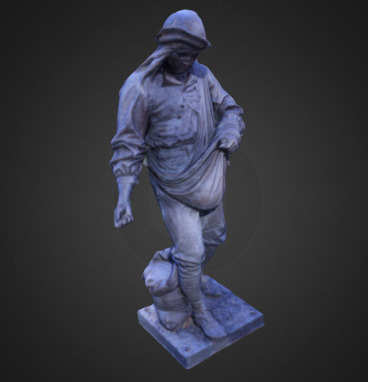
    <summary type="html"><![CDATA[<p><img src="https://projects.dahvc.org/statuesspeak/files/fullsize/77f589cb128a8be99e2f9bad5d0d62a6.jpg" alt="" /><br/><p><strong><em>This life-size bronze statue was set up on East Campus (then the campus of Trinity College) in 1914. </em></strong></p><p><div class="sketchfab-embed-wrapper"><iframe width="100%" height="350" src="https://sketchfab.com/models/896b21297aa2431ea1bb509b45e0ed59/embed" frameborder="0" allowvr="" allowfullscreen="allowfullscreen" mozallowfullscreen="mozallowfullscreen" webkitallowfullscreen="webkitallowfullscreen" onmousewheel=""></iframe></div></p></p><p><em><strong><a href="https://projects.dahvc.org/statuesspeak/items/show/30">For more (including 8 images and 1 sound clip), view the original article</a>.</strong></em></p><p></p>]]></summary>
    <published>2015-12-04T21:42:30+00:00</published>
    <updated>2020-09-04T20:20:58+00:00</updated>
    <link rel="alternate" type="text/html" href="https://projects.dahvc.org/statuesspeak/items/show/30"/>
    <id>https://projects.dahvc.org/statuesspeak/items/show/30</id>
    <author>
      <name>Elizabeth Baltes and Jessica Williams</name>
    </author>
  </entry>
  <entry>
    <title type="html"><![CDATA[Washington Duke  – Want to know more about the oldest statue on Duke's campus?<br /><br /><audio controls="controls"><source src="https://projects.dahvc.org/statuesspeak/files/original/6e6eb1c395e92c735408cbf423f06b36.mp3" type="audio/mpeg" /><style> audio::-internal-media-controls-download-button {
    display:none;
}

audio::-webkit-media-controls-enclosure {
    overflow:hidden;
}

audio::-webkit-media-controls-panel {
    width: calc(100% + 30px); /* Adjust as needed */
}</style>Your browser does not support the audio element. </audio>]]></title>
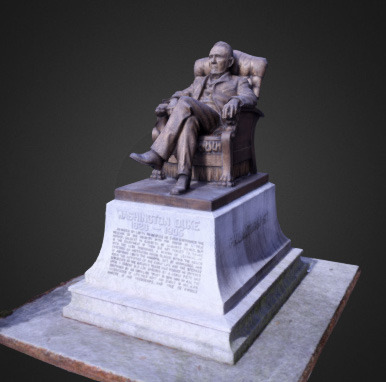
    <summary type="html"><![CDATA[<p><img src="https://projects.dahvc.org/statuesspeak/files/fullsize/26ec3cc135b33e3fba386c4b965fc102.jpg" alt="" /><br/><p><strong><em>This statue commemorates the patriarch of the Duke family. It was unveiled during the commencement ceremony in 1908, making this statue the longest-standing on Duke&#039;s campus. There was no formal mechanism for placing statues on campus until 1995, and so the sponsors of the statue chose a site on what is now East Campus &quot;on account of the interest taken by Mr. Duke in the welfare and progress of this institution of learning.&quot;</em></strong></p><p><div class="sketchfab-embed-wrapper"><iframe width="100%" height="350" src="https://sketchfab.com/models/fe5ef91e711e4b4f8b0f9072e3fb224a/embed" frameborder="0" allowvr="" allowfullscreen="allowfullscreen" mozallowfullscreen="mozallowfullscreen" webkitallowfullscreen="webkitallowfullscreen" onmousewheel=""></iframe></div></p></p><p><em><strong><a href="https://projects.dahvc.org/statuesspeak/items/show/29">For more (including 8 images and 1 sound clip), view the original article</a>.</strong></em></p><p></p>]]></summary>
    <published>2015-12-04T21:29:44+00:00</published>
    <updated>2020-09-04T20:22:49+00:00</updated>
    <link rel="alternate" type="text/html" href="https://projects.dahvc.org/statuesspeak/items/show/29"/>
    <id>https://projects.dahvc.org/statuesspeak/items/show/29</id>
    <author>
      <name>Elizabeth Baltes and Christy Kuesel</name>
    </author>
  </entry>
</feed>